


MobileTrader
MobileTrader: platform trading dalam genggaman!
Unduh dan mulai sekarang!

 02.11.2026 02:01 PM

Investors around the world are confronting a compound shock. Political uncertainty from the US midterms and a French debt crisis was amplified by panic in commodity markets and a sharp drop in gold prices.
Tech stocks are bearing the brunt — Intel's collapse is a prime example — and the crypto space was hit hard by a massive cyber-heist that cost Binance billions.
In this note, we analyze the triggers behind these events, identify hidden vulnerabilities that persist beneath the calm, and outline adjustments investors can make to navigate heightened financial instability.
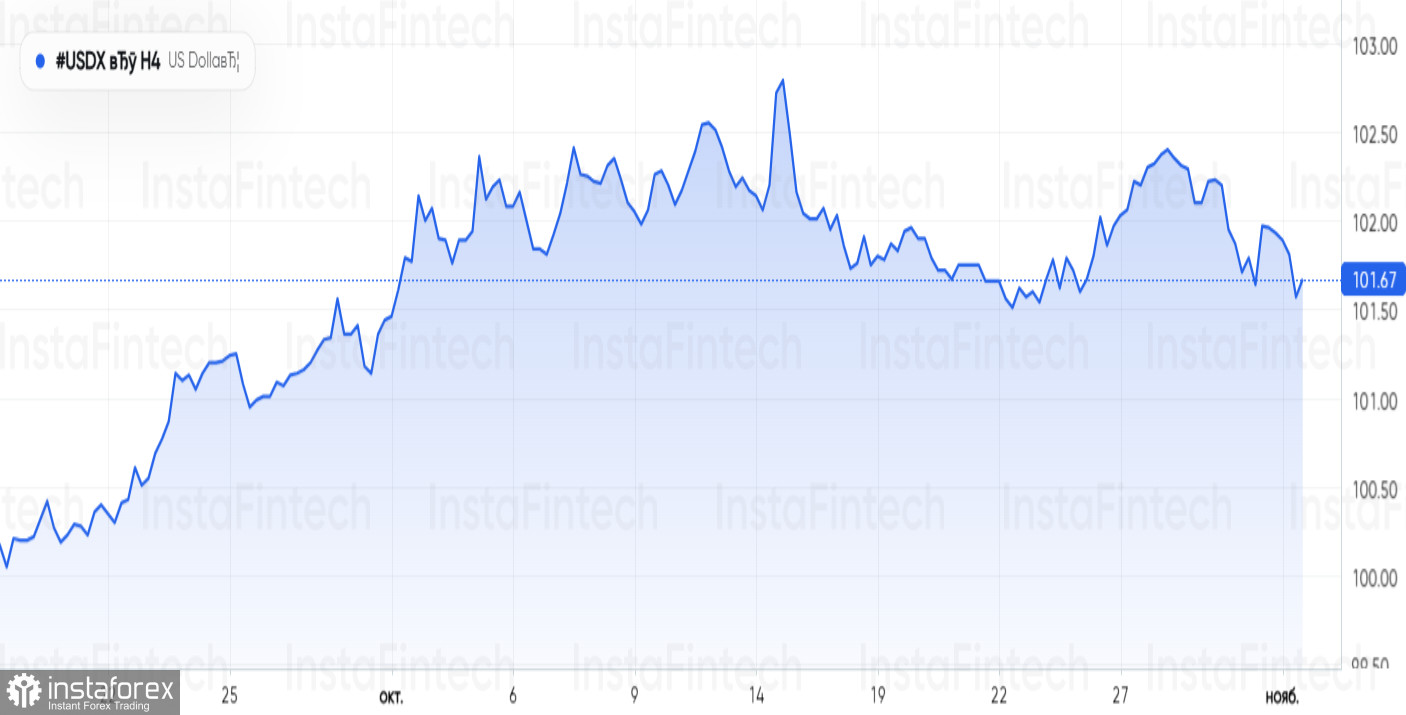
Monday, November 2, opened with deceptively quiet markets. During the Asian session, the dollar and major FX pairs showed notable stability. But that external calm masks significant tension: investors are holding their breath ahead of a sequence of events capable of reshaping global markets.
The week's main political event is the US midterm election on November 3, which will determine control of the House and Senate and directly influence federal spending trends — with consequences for global risk appetite. However, politics is only part of the story: a marathon of macro releases is also due, including October labor data in the US and interest rate decisions from the Bank of England, the RBA, Norges Bank, and the Riksbank.
While the dollar waits, the euro is under pressure near 17-month lows, levels not seen since May 2025. The culprit is France. On Friday, after markets closed, Fitch cut France's sovereign outlook from "stable" to "negative."
Fitch warns that political fragmentation and slowing growth reduce Paris's ability to rein in public debt. Projections are worrying: government debt could reach 124% of GDP by 2028, versus 115.7% in 2025.
Domestic political paralysis is part of the problem. Prime Minister Sebastien Lecornu's budget package, intended to cut the deficit, has yet to win parliamentary approval. Moody's earlier left France at Aa3 with a negative outlook, signaling that policymakers must still reach a deal on the 2027 budget.
In the US, polls show Democrats favored to win control of the House, while the Senate race remains competitive. Eric Robertsen, head of global research at Standard Chartered, cautions that despite strong anti-establishment sentiment, electorates can still surprise.
If Democrats sweep both chambers, markets could face one of the sharpest political confrontations over the debt ceiling in recent memory.
Liquidity concerns add to the nervousness. Andrea Kobrelich of AMINA Bank notes that October hedge fund losses were large enough to erode cushions for many big players. In that setting, markets have little spare capacity to absorb shocks.
When volatility and geopolitical risks rise, speed of execution and robust trading tools matter. The FX pairs and instruments mentioned are available for trading on the InstaForex platform.
Don't miss the opportunity to profit from current market trends and macro news. Open a trading account on the InstaForex platform now and download the company's mobile app. That will let you stay on top of global financial markets, analyze charts, and execute trades 24/7 from anywhere.
Friday, October 30, was a truly dark day for gold bulls. The yellow metal suffered its sharpest drop in months, plunging by 3.6%. Spot gold closed at $3,875.55/oz, the lowest level since October 2025. For the month of October, gold lost roughly 6.8%, marking a second consecutive monthly decline. That leaves the metal about 30% below its January all-time high near $5,595. What triggered this storm? An "ideal storm" of geopolitics, macroeconomic pressure, and panic on equity floors.
The catalyst was oil. An attack on a tanker in the Strait of Hormuz highlighted the large supply risks from the ongoing US-Israel-Iran confrontations, Reuters notes. Rising crude instantly stoked inflation fears.
Those fears were reinforced by hard data: September US inflation showed renewed acceleration. While the Fed held interest rates at its October meeting, the market is already pricing in further tightening.
CME Group's FedWatch tool puts the odds of a December hike at about 72.9%. Dallas Fed President Lorie Logan went further, saying the Fed needs "at least two more 25-bp hikes." For gold, a non-yielding asset, expensive money is always toxic.
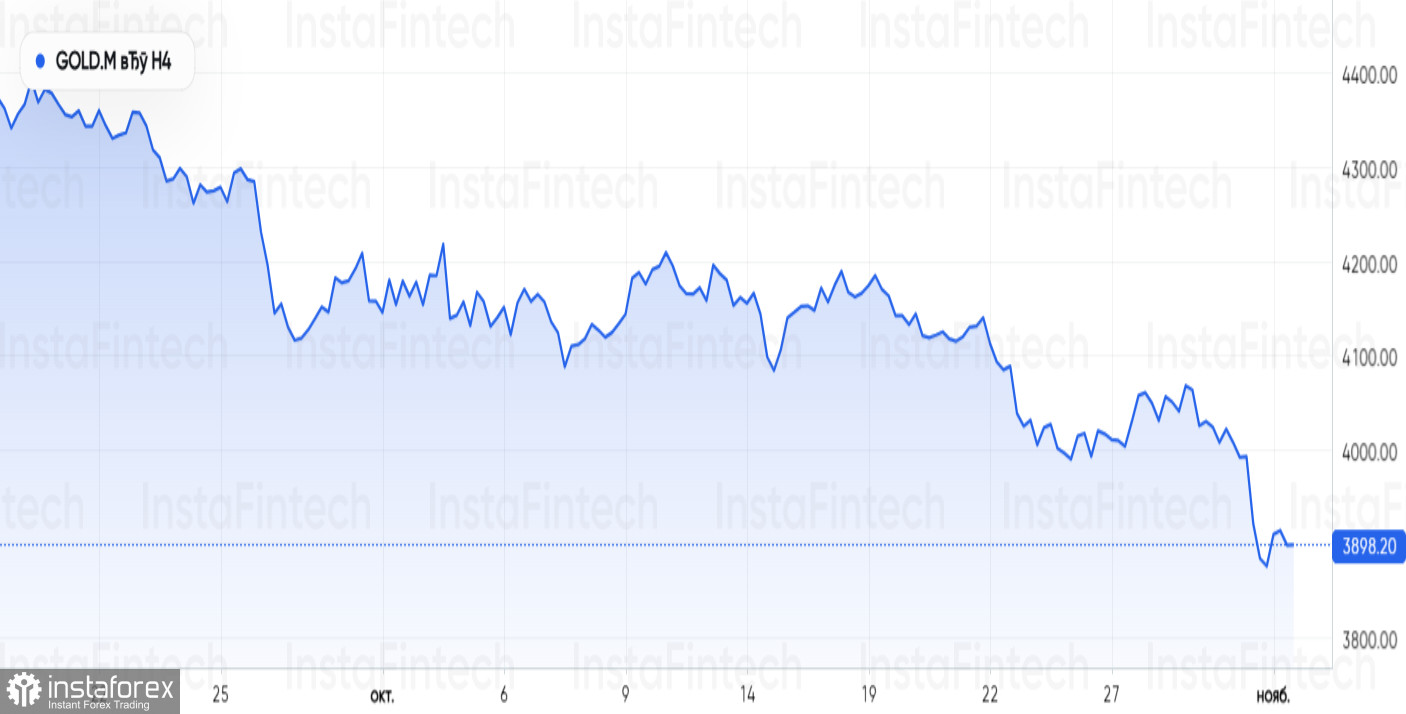
But don't blame macro alone. Behind the scenes a liquidity drama unfolded. A sharp tech?sector sell?off (the Nasdaq Composite plunged by 2.9%) triggered a cascade of margin calls. Traders urgently needed cash and began selling the most liquid assets, including gold.
Commerzbank views the metal's drop as exaggerated and still expects a recovery. Bart Melek at TD Securities agrees: the oil shock redirected flows into US Treasuries, pulling money out of equities and bullion.
Paradoxically, Treasury yields fell during Friday's session — a sign that a large share of the gold collapse was not driven by fundamentals but by forced liquidations.
In Asian trading on Monday, November 2, gold made a tentative attempt to recover. Analysts urge caution: any bounce may be weak until traders get clarity on the December Fed decision. Over the medium term, the metal remains pressured by a strong dollar and elevated yields.
Not all forecasts are bleak. A recent Reuters survey trimmed its 2026 average gold forecast to $4,495 but raised the 2027 estimate to $4,650, reflecting continued faith in the metal's long-term potential.
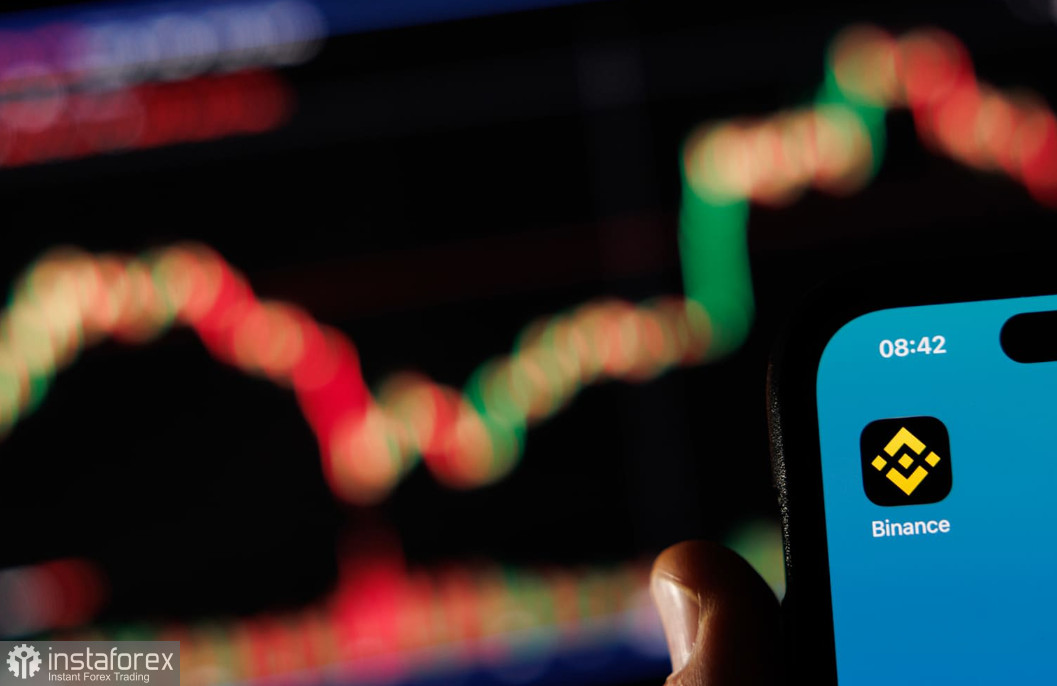
While global investors pore over corporate balance sheets, North Korean hackers have rewritten the record books of the crypto industry. In late October, Binance suffered the largest exchange hack ever, losing assets of a staggering size. For reference, the stolen Bitcoin alone, roughly 18,270 BTC (about $1.43 billion), exceeds Tesla's entire corporate Bitcoin treasury (11,509 BTC as of the end of September) by nearly 60%.
But BTC was only the tip of the iceberg. Total losses, including Ether and stablecoins, reached an eye-watering $6.3 billion. The Associated Press has already labeled the incident the largest theft in the history of digital assets.
On October 31, the FBI tied the attack to a North Korean state-linked group known as TraderTraitor — part of the broader Lazarus infrastructure. Investigators say this was not a smash-and-grab opportunistic hack but a planned operation.
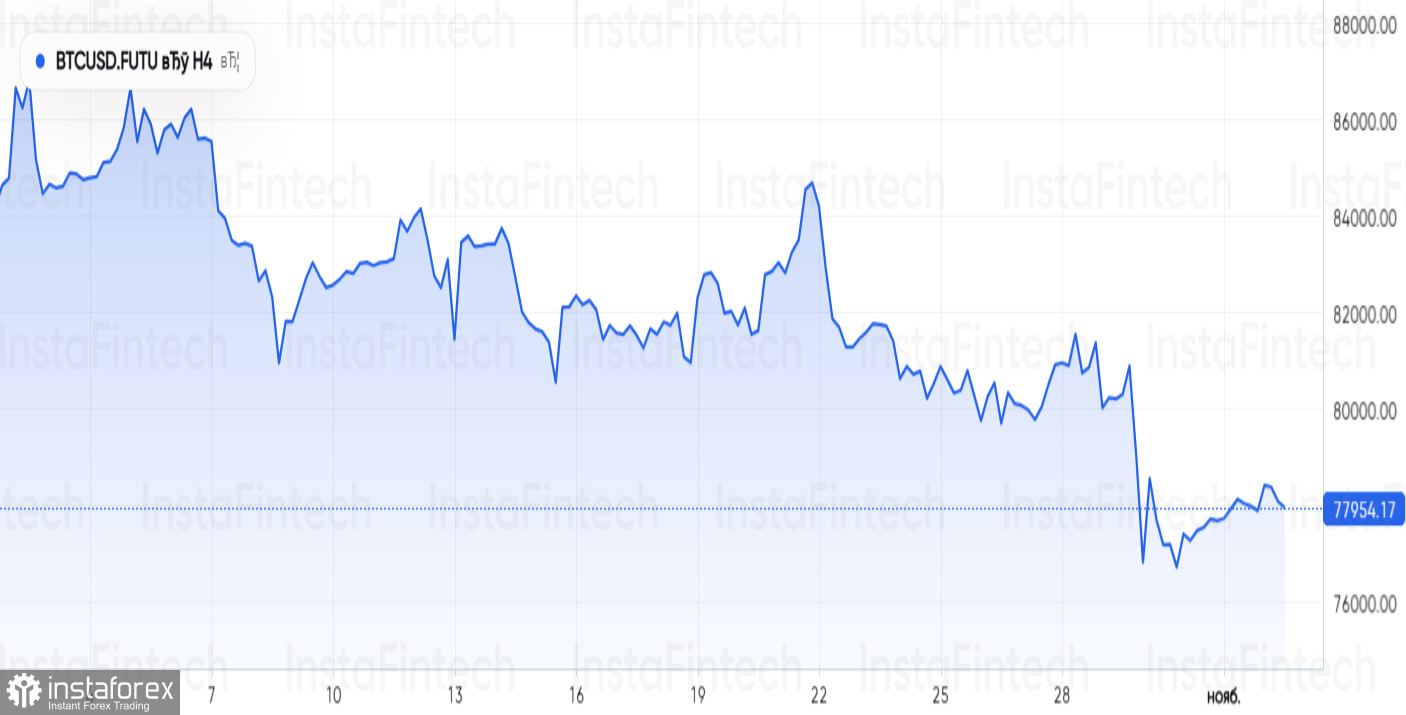
The attackers didn't hold the stolen value in Bitcoin; they quickly began converting assets into Ethereum. Blockchain analytics firm BitQuery reports that by the end of October, the hackers' wallets held more than 525,000 ETH that now need to be "cleaned."
Investigators traced the vulnerability to a basic human failure. The attack began with a compromised laptop belonging to one of Binance's engineers. Once inside the internal network, the attackers bypassed standard transaction-approval safeguards.
At 20:05 UTC on October 29, they emptied the exchange's hot wallets. Binance co-founder and co-chair Richard Teng confirmed the compromise and said funds were withdrawn from a wallet with direct internet access.
The unprecedented incident has already disrupted business plans for Binance partners. Philippine firm BlockShoals Technologies, which had been preparing to roll out Binance products in a regulatory sandbox run by the local SEC, said it must pause operations. BlockShoals said it is carefully assessing the hack's impact on a 90-day systems integration phase.
Meanwhile, scammers have proliferated amid the panic. Binance urged users to rely only on official channels and to ignore fraudulent promises of "recovered funds."
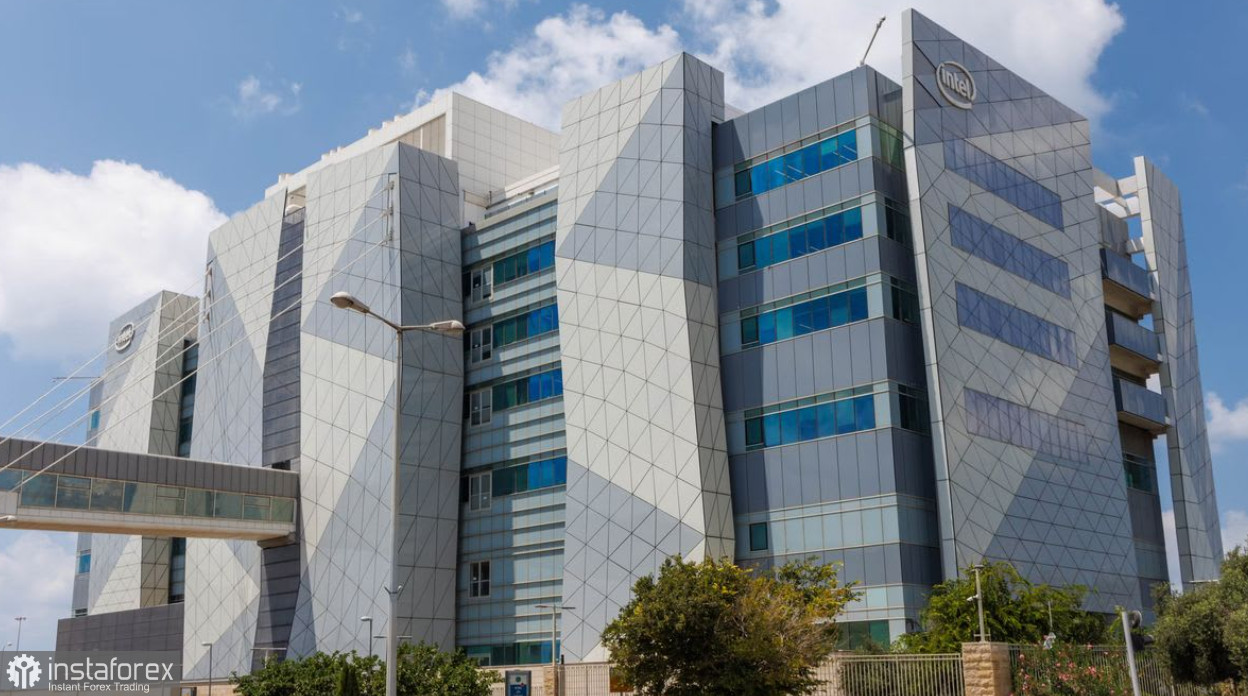
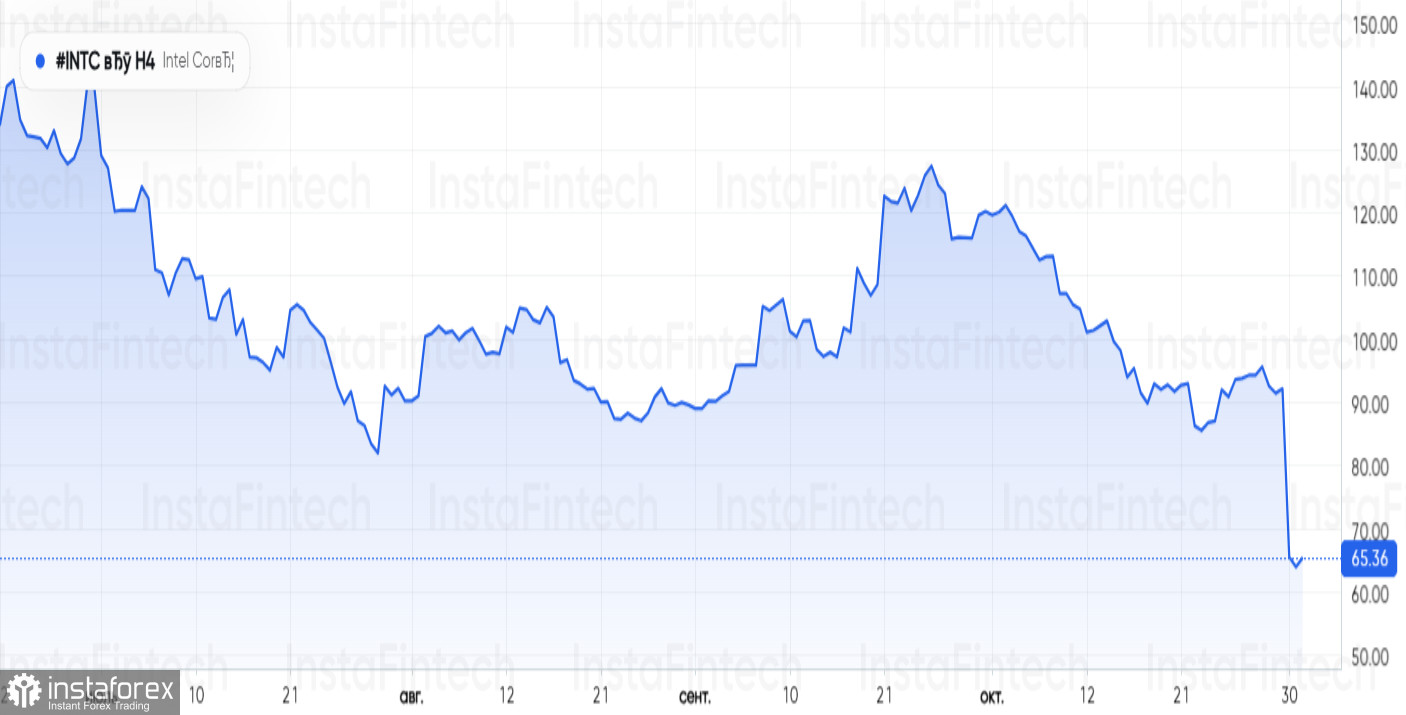
Friday, October 30, was a day investors will not forget soon. Shares of tech giant Intel collapsed 28.58% — not just a routine correction but the company's most catastrophic one-day drop since July 1974. Roughly $140 billion of market capitalization evaporated in a single session. What triggered panic across Wall Street and Asian exchanges?
The painful part for investors is that the trigger wasn't an outright earnings miss. Intel reported a strong Q3: revenue rose by 21% to $16.5 billion, and its data center and AI segment surged about 78%. But the euphoria was instantly crushed by the Q4 guidance. Instead of Wall Street's expected $17.07 billion in revenue and $0.43 EPS, management guided to only $15–16 billion and $0.25 EPS. Against a strong quarter, that "cold shower" hit investors especially hard.
The primary culprit is a paradoxical side effect of the AI boom. AI data centers are buying high-bandwidth memory at such rates that memory prices have spiked, pushing up PC costs and compressing consumer demand for PCs. CEO Patrick (Lip?Bu) Tan conceded that customers are flagging a slowdown in the PC market. Forecasts are bleak: PC shipments are expected to fall about 12% this year and another 10% in 2027. Revenue from PC processors, roughly $8.1 billion last quarter, could drop by more than 20%, per The Wall Street Journal.
Financial pain was compounded by a tragic operational shock. A gas explosion at Fab 28 in Kiryat Gat, Israel, killed two workers and shut the plant for two weeks. CFO David Zinsner put the hit in stark terms: about $300 million of lost revenue in Q4 and a roughly 200-bp hit to gross margin. The echo from that disruption will likely affect results into Q1 next year.
Analysts reacted quickly and harshly. Bank of America cut its rating to Neutral and slashed its target from $145 to $100. Bernstein and UBS cut forecasts to $75 and $80, respectively. Bernstein's Stacey Rasgon called Intel's guidance simply "terrible."
The panic spread beyond Intel. The Philadelphia Semiconductor Index plunged by 7.2%, AMD fell by nearly 11%, and the Nasdaq Composite lost 2.86%. The selling wave hit Asia as well: Korea's Kospi slid by 3.48%, tripping circuit breakers, and titans SK Hynix and Samsung Electronics also fell sharply.
This level of volatility in semiconductors and megacaps is both a risk for long-term investors and an opportunity for active traders. Proper platforms and risk management enable trading both the downside and the rebound.
The trading instruments mentioned in this note, including major tech stocks and index products, are available on the InstaForex platform. Grab your chance to benefit from global market shifts: open an account on this reliable platform today and download the mobile app to stay on top of global markets and trade 24/7 from anywhere in the world.
MobileTrader: platform trading dalam genggaman!
Unduh dan mulai sekarang!
Anda telah menyukai postingan ini hari ini
*Analisis pasar yang diposting disini dimaksudkan untuk meningkatkan pengetahuan Anda namun tidak untuk memberi instruksi trading.
 E-mail untuk penulis konten analisis teks dan video: content-authors@instaforex.com


